Turn your Elicit Library into a shared research hub
Research Agent can now work from your Library, teams can maintain collections together, and Projects can prioritize the evidence that matters

1 min read

The most valuable evidence is revisited across projects, challenged by colleagues, and updated as a field changes. Too often, though, the papers behind a decision are scattered across personal reference managers, old searches, and project files. A new teammate may be able to see the final work without seeing the evidence that shaped it.
Today, we’re evolving the Elicit Library into a shared research hub where researchers and AI agents can work from the same evidence:
The Research Agent can search papers in your personal and shared collections, use those sources in its research, and save new papers directly to a collection.
Teams can build and maintain shared collections of important literature.
Projects can be linked to collections so the Research Agent knows which evidence matters most to the work.
Together, these changes make research in Elicit more cumulative: a useful paper found today can become trusted context for your team’s next question.
Start from evidence you already trust
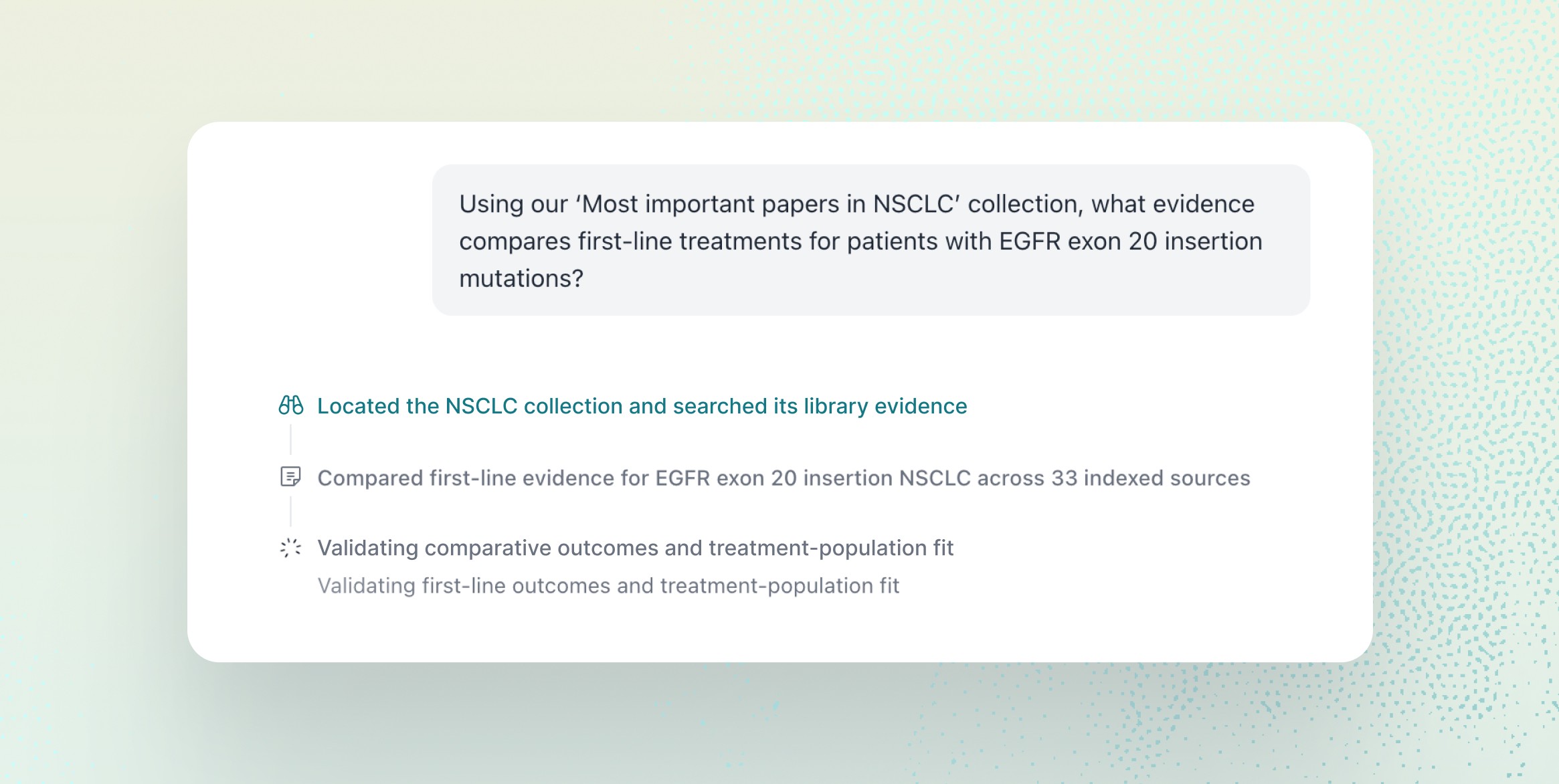
Imagine your team maintains a collection called “Most important papers in NSCLC.” You can ask the Research Agent:
“Using our ‘Most important papers in NSCLC’ collection, what evidence compares first-line treatments for patients with EGFR exon 20 insertion mutations?”
The Research Agent can search the collection, read the relevant papers, and answer with citations back to the source material. Instead of starting from the entire scientific literature every time, you can begin with evidence your team has already reviewed and ask a new question of it.
This is useful when you want to revisit a therapeutic area, test a hypothesis against a defined evidence base, or continue work that began in an earlier research session. Your Library becomes persistent research context.
Turn each search into reusable team knowledge
Research also produces new evidence worth preserving. When the Research Agent finds useful papers, you can ask it to save them directly to a specific collection:
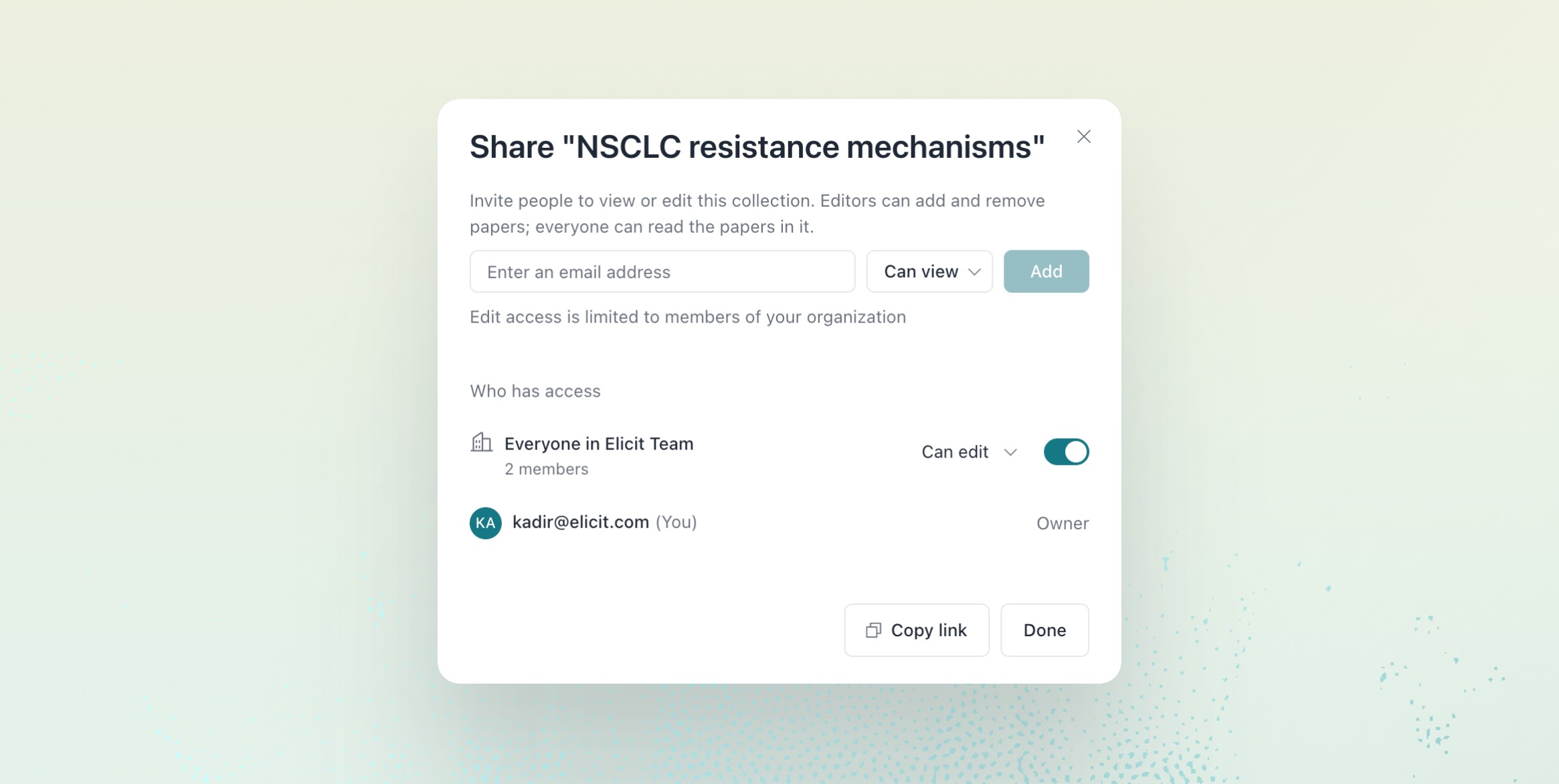
“Save these 7 papers to our ‘NSCLC resistance mechanisms’ collection.”
You can share a collection with individual collaborators, or your organization. Colleagues can review the same literature and contribute additional papers themselves.
This makes it possible to maintain durable evidence bases around the domains your team cares about: the most important papers on a target, the literature supporting a mechanism of action, or the evidence behind a clinical strategy. This evidence base become part of the team’s shared starting point.
Keep the evidence behind a Project close to the work
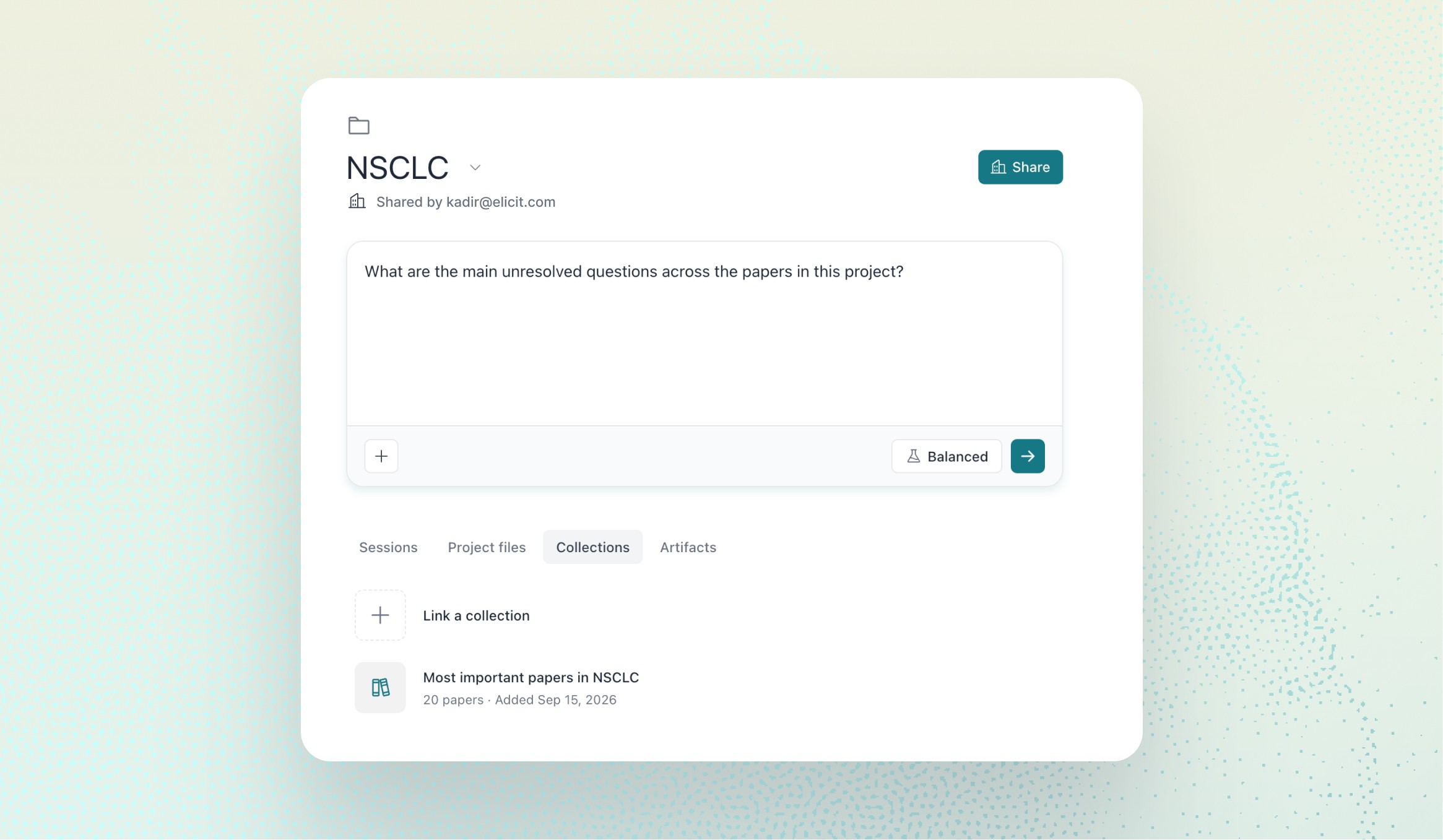
Collections can now be linked to Projects. The linked collections tell the Research Agent which sources are especially important when it works inside that Project.
For a team investigating NSCLC treatment strategy, the Project can bring together its sessions, outputs, instructions, and the collection of literature behind the work. When a new colleague joins, they can see not only what the team has produced, but also the evidence it cares about. They can review the key papers and immediately ask follow-up questions with the same context.
Building research that compounds
Research is often disorganized. Sources are rediscovered, context is lost, and valuable work remains tied to the person who first did it.
We want Elicit to be a shared environment where research compounds over time. By bringing personal and shared collections, Projects, and the Research Agent together, work by different researchers can build a durable foundation to launch the next path of research.


