AI-powered research is now multiplayer
Skills, Collaborative Sessions, Artifact Editing, and Shared Projects in Elicit make AI-powered research more collaborative


1 min read

AI has enabled a single researcher to do more work than ever before. But making individual tasks faster only solves part of the problem with research. Scientific progress is cumulative, with each advance building on the work of others. If AI is going to transform scientific research, it also needs to support how researchers actually work. At Elicit, we believe in empowering teams, so we’ve built the shared environment that science needs for researchers and AI agents to work together.
An AI environment built for collaborative science
We started by helping researchers automate evidence synthesis. More recently, with the launch of Elicit Research Agent, APIs, and the MCP server, we expanded what people could do with that evidence. As these workflows have become more capable, we want to take the next step toward supporting collaborative research. We believe three principles are especially important for making AI-powered research more collaborative.
1. Research expertise should be reusable
A lot of research expertise lives in the process people use to get an answer. Expert researchers know which sources to check, what questions to ask, what evidence to prioritize, and how to structure the final output. But these workflows are highly variable across teams and are difficult to replicate across teammates.
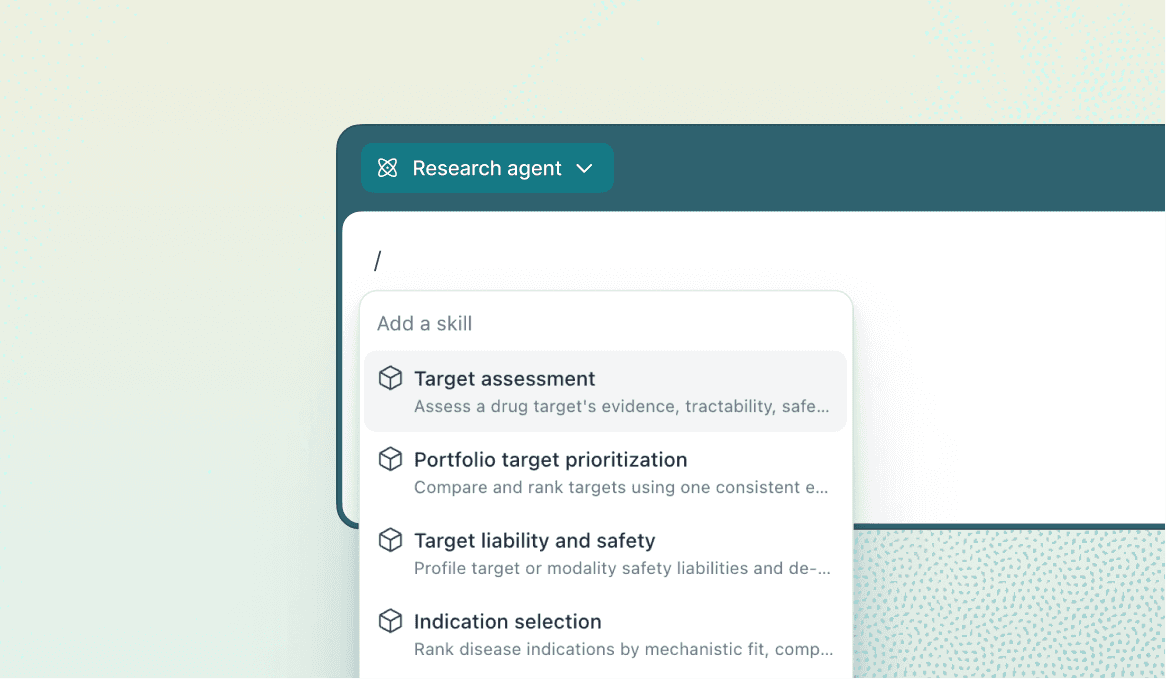
That is why we built Skills. Skills allow researchers to formalize research workflows and share them across the organization. Elicit also comes preloaded with a suite of Skills that use industry best practices for common research use cases. Researchers can use these out-of-the-box Skills or create their own to share with others on the team.
Over time, we want teams to build a shared library of Skills that reflects how their organization works, so useful research methods can spread beyond the person who developed them. Skills are now available in Elicit for Pro, Scale, and Enterprise subscribers. Read the help article to get more details on this feature.
2. Research is a shared experience
With most AI tools available today, collaboration often starts only after the initial work is complete and someone shares the output for review. Real-world research, however, involves multiple moving parts and may require multiple researchers to work on different aspects of the research process or play different roles along the way.
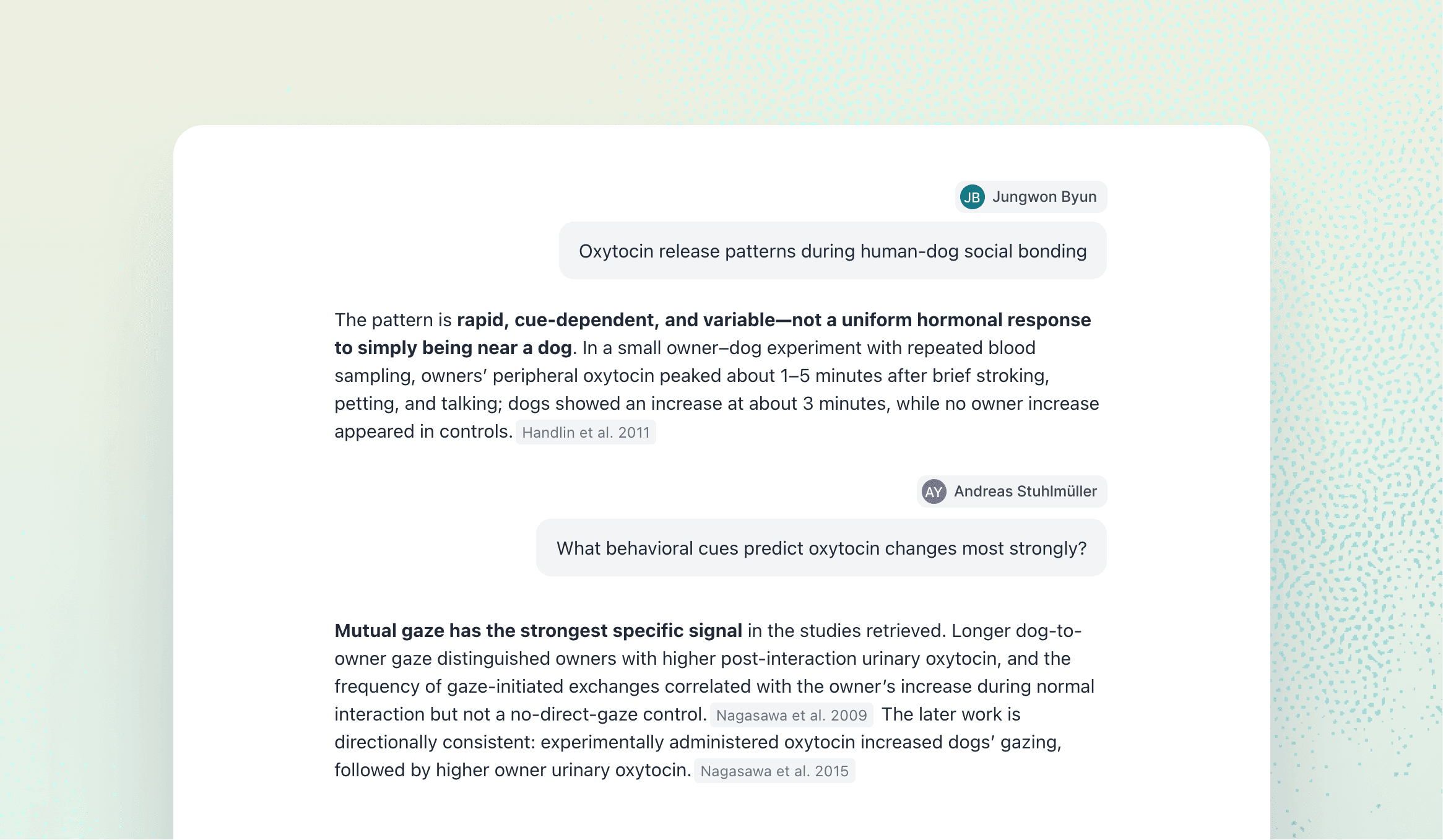
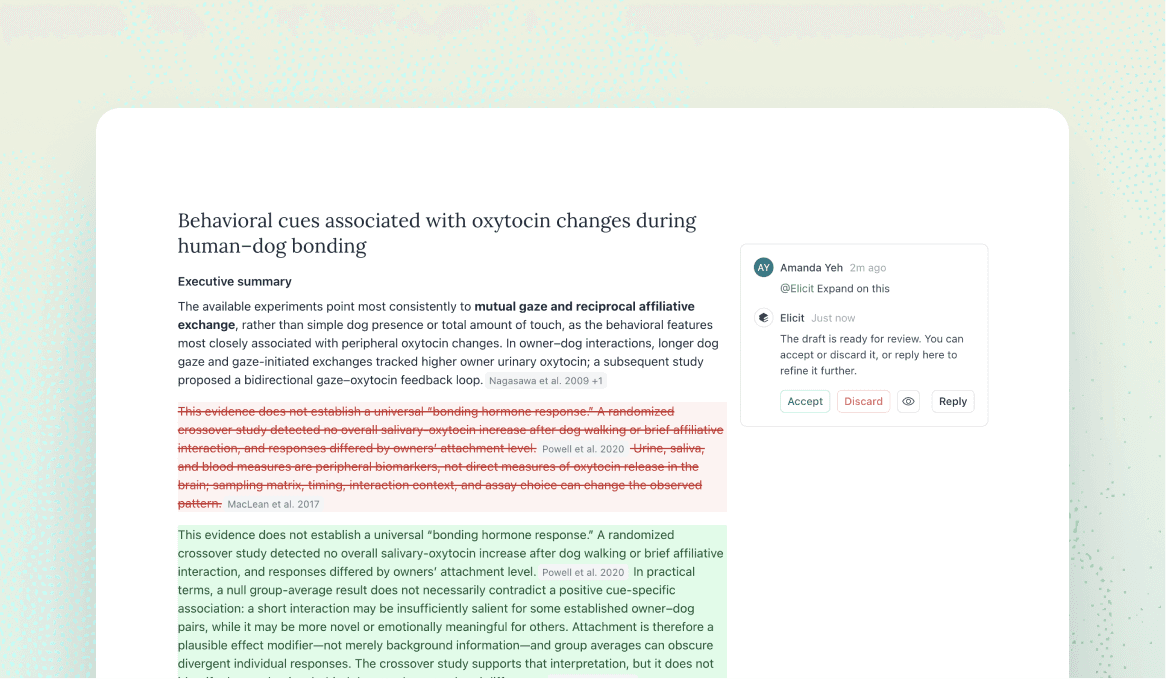
We want to make the research process collaborative from the start. That is why we built Collaborative Sessions and artifact editing. Collaborative Sessions allow multiple researchers to work from the same session and shared context, edit shared artifacts, and view the complete version history of all edits. Artifact editing allows researchers to independently engage the Research Agent to build on prior work. Researchers can spin up side threads to have the Agent answer questions about work that has been created.
Now, for the first time in Elicit, researchers can co-create, review each other’s work, and collaborate with AI agents on the same scientific problem. Collaborative Sessions and artifact editing are available to Elicit users who are part of an organization and are on the Scale or Enterprise plans. Read the help article to learn more.
3. Research should build institutional knowledge
Research work is often recreated because the context behind it is hard to find or has been lost. Evidence is collected for one project, analyses live in separate files, and useful context stays with the person who did the work. As a result, teams often have to rebuild much of the work.
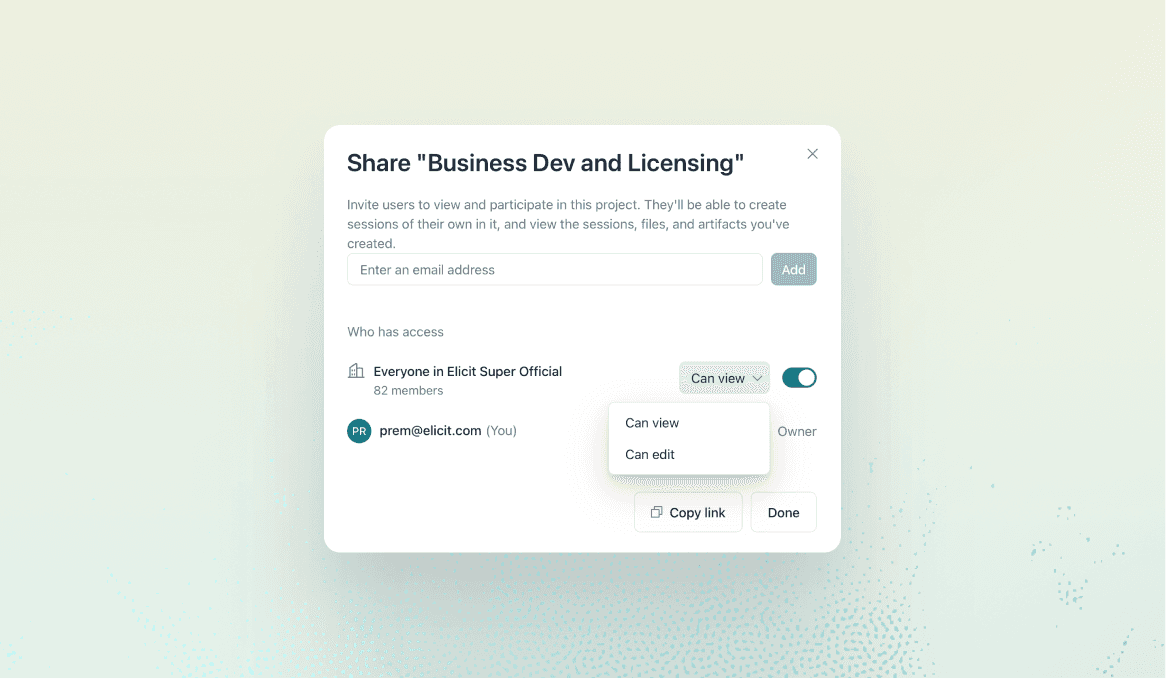
That is why we built Shared Projects. They give teams a persistent space for related research, including sessions, project files, sources, artifacts, and other project context, all of which can be shared across the team. As a result, different researchers can contribute to distinct streams of work in parallel, all toward a common goal.
As Shared Projects evolve, we want it to become a place where teams can return to existing work, understand what has already been done, and continue building on it. Shared Projects are available to Elicit users who are part of an organization and are on the Scale or Enterprise plans. Read the help article to learn more about this feature.
Where we go from here
We are well on our way to making Elicit a shared environment where people and AI agents can collaborate on scientific work and contribute to work that compounds over time. The updates above are important steps toward making Elicit a home for collaborative research, where the work done today becomes useful context for the work that comes next. Over time, we want teams to build their institutional knowledge on Elicit and redefine what AI and researchers can accomplish together.
Talk to us to see how Elicit can help your team build a shared research environment, reuse knowledge across projects, and collaborate more effectively with each other and AI.


